

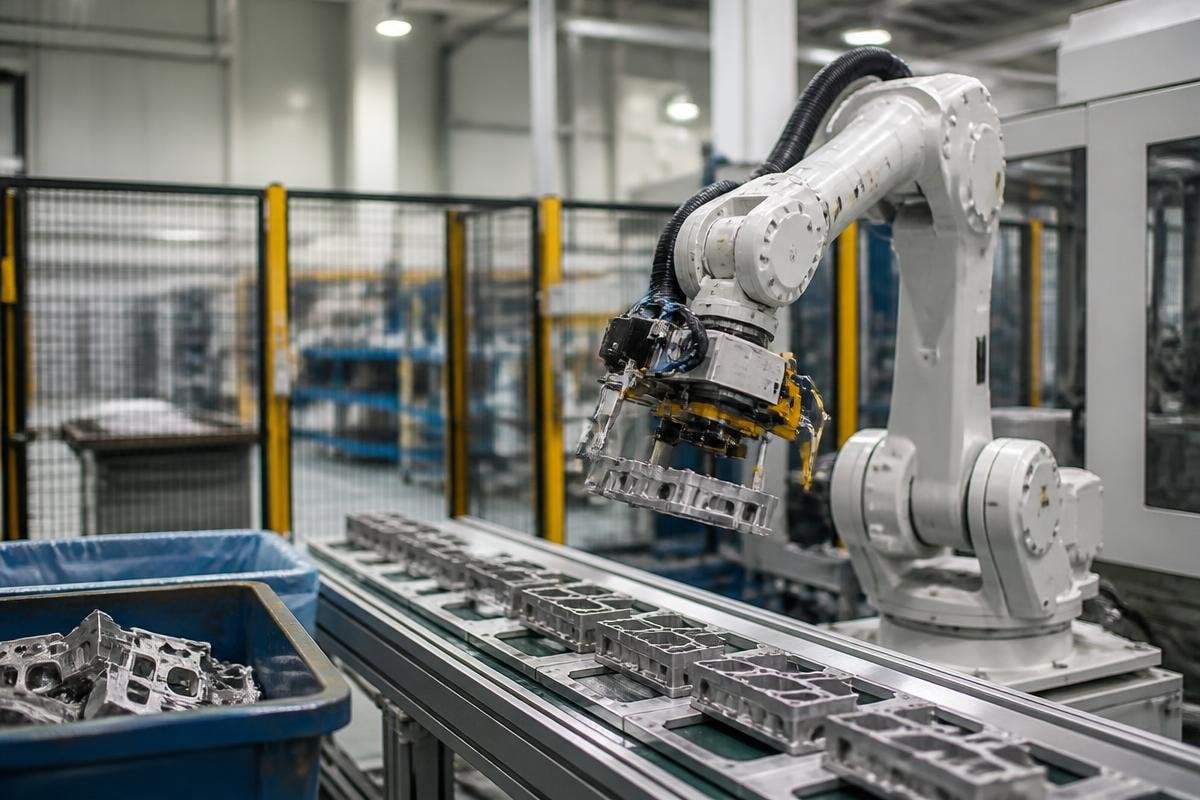
A robot can cut manufacturing waste before scrap reaches the bin. It does that through repeatable handling, steady process control, and better records of where defects begin.
This matters to a plant manager watching material costs, rework hours, and missed deliveries. The machine only helps when its task is clear and its results are checked.
- Robots can place parts with repeatable force and position.
- Cameras and sensors can spot some defects during production.
- Good process data can show where scrap starts and why.
Start with the waste you can measure
Waste takes several forms on a factory floor. Scrap is the most visible, but rework, excess motion, damaged parts, unused material, and idle equipment also consume money.
Scrap may fall when the arm handles parts in the same way each cycle. A pick-and-place arm, for example, can move parts without dropping them or pressing on a fragile surface. The result depends on the gripper, the part design, and the robot’s setup.
That last point matters. The same machine can repeat a poor process with great accuracy. Before buying equipment, record where waste occurs, how often it happens, and what starts the loss.
Control the process, not only the arm
Manufacturing waste often begins with small process changes. Tool wear, a shifted fixture, or material with a different thickness can start the problem. Several more pieces may pass before an operator finds the bad part.
Sensors can check position, force, temperature, or tool condition during the work. A vision system uses cameras to compare a part with a set pattern. If the reading moves outside the allowed range, the line can stop or send the part for inspection.
This approach works best when the plant sets a clear response for each fault. A warning may call for a tool check. A failed measurement may send one part to a review station. Stopping the whole line for every small variation can create a different kind of waste: idle production.
A scrap rate only matters when the report shows which parts failed, why they failed, and what happened next. Dated factory reports from Robot 24 can connect those results to the machine and task, giving you a clearer basis for judging material use. The next step is to see how robots can prevent scrap before a part reaches inspection.
Use less material during production
Robots can reduce waste through accurate dispensing, cutting, welding, and coating. A dispensing system can place a controlled amount of adhesive or sealant along a set path.
A cutting robot can follow a programmed layout that leaves less unused material between parts. The savings come from the process settings, not from the robot label.
Operators still need to check nozzle size, tool wear, feed rate, and part position. A small error at the start can spread across a long production run.
Robots can also sort reusable offcuts from material that must be discarded. That requires clear rules and separate bins, along with a way to identify each material. Mixed waste is harder to reuse because the plant may not know what it contains.
Track defects back to their source
A robot cell can record the part number, task result, sensor readings, and time of each cycle. These records give a plant team a way to compare good parts with failed parts.
The data becomes useful when it leads to a physical check. If defects rise after a tool change, inspect the tool and its mount. If damage appears at one handoff, check the gripper and the conveyor. The record points people toward the right place, but it doesn’t repair the cause.
The same records can show whether a waste project worked. Compare scrap and rework before the change with the same measures after the change. Keep product mix and shift patterns in view, since a different job can change the result.
A practical buying checklist
Before adding a robot to a waste-reduction project, check these points:
- Name the loss: measure scrap, rework, material use, or idle time before choosing equipment.
- Find the cause: confirm the fault with samples, process records, or an inspection step.
- Test the handoff: watch how parts enter and leave the robot cell, since many damaged parts fail there.
- Set a response: decide when the system warns, pauses, rejects a part, or calls a technician.
- Review the payback: include grippers, sensors, software, training, service, and line downtime in the cost.
I’d start with one repeatable task that creates visible waste and has a clean way to measure the result. A pilot can then show whether the robot cuts loss or only moves the problem to another station.
The next useful number is the plant’s measured scrap rate after that pilot, recorded against the same product and process conditions.
