

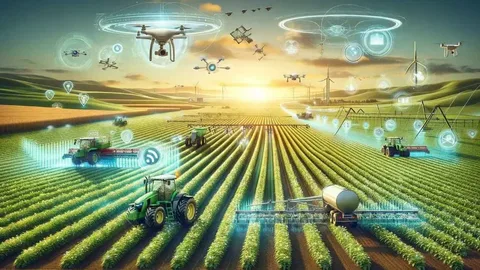
Precision agriculture is transforming modern farming by integrating advanced technologies to improve crop yields, reduce waste, and optimize resource use. Among these technologies, drones and sensors play a pivotal role. Understanding the role of drones and sensors in precision agriculture reveals how these innovations are shaping the future of sustainable farming.
Understanding Precision Agriculture
Precision agriculture is an approach that uses detailed data collection and analysis to manage fields at a micro-level. This method enables farmers to apply water, fertilizers, and pesticides precisely where they are needed, reducing costs and environmental impact while enhancing crop productivity.
The Role of Drones in Precision Agriculture
Drones, also known as unmanned aerial vehicles (UAVs), have become indispensable tools in precision agriculture. Equipped with high-resolution cameras and multispectral sensors, drones provide real-time aerial imagery of crops. This allows farmers to:
- Monitor crop health by detecting disease, pest infestations, and nutrient deficiencies early.
- Map field variability for more targeted interventions.
- Assess irrigation needs by identifying dry or overwatered areas.
By enabling rapid and frequent data collection, drones support timely decision-making, which is critical for maximizing yields.
The Role of Sensors in Precision Agriculture
Sensors complement drone technology by providing detailed information from the ground level. Soil sensors measure moisture, temperature, pH, and nutrient content, while plant sensors track growth patterns and stress factors. These sensors are often connected via IoT (Internet of Things) networks, allowing continuous data flow and integration.
The role of sensors in precision agriculture extends to:
- Optimizing irrigation schedules based on real-time soil moisture.
- Adjusting fertilizer application tailored to soil nutrient levels.
- Enhancing pest management through early detection.
Together, drones and sensors offer a comprehensive data set that empowers farmers to make informed, precise interventions.
Integrating Drones and Sensors for Maximum Impact
The true power of precision agriculture lies in integrating data from both drones and sensors. Combining aerial images with soil and plant data creates a holistic view of the farm, enabling:
- Site-specific crop management.
- Reduced input costs by avoiding blanket applications.
- Improved sustainability through minimized environmental impact.
Farmers adopting these technologies report increased efficiency and higher yields, confirming the vital role of drones and sensors in precision agriculture.
Conclusion
As the agricultural sector faces increasing challenges such as climate change and population growth, embracing technology becomes essential. The role of drones and sensors in precision agriculture is central to driving innovation that promotes sustainable, efficient farming practices. By leveraging these tools, farmers can ensure healthier crops, optimize resource use, and secure food production for the future.
