

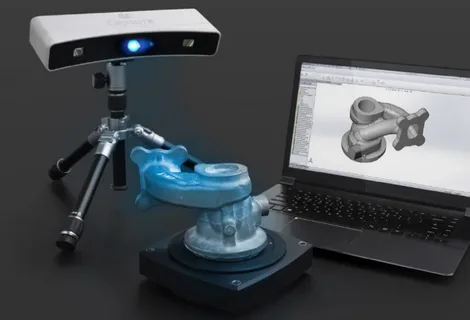
The healthcare industry is continuously evolving, and one of the most exciting advancements is the use of 3d scanning technology. This cutting-edge innovation is reshaping how medical professionals approach diagnostics, treatment planning, and even surgery. From improving the accuracy of medical imaging to creating customized prosthetics, 3D scanning is proving to be a game-changer in healthcare. In this article, we explore how 3D scanning is transforming healthcare and medical applications, and the profound impact it’s having on patient care.
What is 3D Scanning?
3D scanning is the process of capturing the shape and appearance of an object or surface and converting it into a digital model. In the medical field, this technology allows for the creation of highly detailed, three-dimensional representations of a patient’s anatomy. Using techniques like laser scanning, structured light, and photogrammetry, 3D scanning can create precise models that are invaluable for a wide range of medical applications.
Applications of 3D Scanning in Healthcare
1. Enhanced Diagnostic Imaging
Traditional imaging techniques like X-rays, CT scans, and MRIs have long been essential tools for diagnosing medical conditions. However, these methods often provide two-dimensional images, which can make it difficult to fully assess the complexity of certain conditions. 3D scanning takes diagnostic imaging to the next level by creating a detailed, three-dimensional model of the body or specific organs.
This allows doctors to better visualize tumors, bone fractures, or vascular issues from every angle, improving their ability to make accurate diagnoses and treatment decisions. Moreover, 3D models can be adjusted and rotated, offering a more comprehensive view compared to static 2D images.
2. Customized Prosthetics and Implants
One of the most notable applications of 3D scanning in healthcare is the development of customized prosthetics and implants. Traditional prosthetics are often one-size-fits-all, which can lead to discomfort or suboptimal functionality. With 3D scanning, medical professionals can create prosthetics that are tailored to the exact specifications of a patient’s body.
By scanning the residual limb or the area where an implant is needed, a digital model can be created and sent to a 3D printer, where the prosthetic or implant is produced. This ensures a perfect fit and can greatly enhance comfort, mobility, and overall quality of life for patients.
3. Surgical Planning and Simulation
3D scanning is also revolutionizing how surgeries are planned. Surgeons can use 3D models of a patient’s anatomy to practice complex procedures before entering the operating room. This not only boosts their confidence but also increases the likelihood of a successful outcome.
In some cases, surgeons can even use 3D printed models of the patient’s organs or bones to simulate a surgery. This hands-on approach helps identify potential challenges and fine-tune the surgical approach, ultimately leading to better results and reduced risk for the patient.
4. Patient-Specific Models for Complex Surgeries
For particularly intricate surgeries, such as those involving the spine, heart, or brain, the ability to create a 3D model of a patient’s specific anatomy is invaluable. These patient-specific models allow surgeons to carefully plan their approach and even practice on replicas of the patient’s own body. This level of personalization ensures that the procedure is as efficient and safe as possible.
In some cases, 3D printing is used to create surgical guides or tools that are customized for the patient. These aids help surgeons perform the surgery with greater precision, reducing the chances of complications and improving patient outcomes.
The Future of 3D Scanning in Healthcare
As technology continues to advance, the role of 3D scanning in healthcare and medical applications is expected to grow exponentially. New innovations in scanning methods, as well as the increasing use of artificial intelligence (AI) and machine learning, will likely make 3D models even more accurate and useful for a variety of medical applications.
Furthermore, the integration of 3D scanning with telemedicine and remote healthcare is expected to improve access to specialized care in underserved or remote areas. With portable scanning devices becoming more affordable, healthcare providers will be able to conduct detailed assessments and offer personalized treatment plans regardless of geographical location.
Conclusion
3D scanning is transforming healthcare in ways that were previously unimaginable. From enhancing diagnostic accuracy to enabling the creation of personalized prosthetics, the technology is making a profound impact on patient care. As the medical field continues to embrace these advancements, the potential for 3D scanning to improve outcomes, increase efficiency, and reduce healthcare costs is limitless.
